Sacramento homeowner guide · Exterior wood damage
Wood Rot Around Windows and Doors: What to Check
A soft window sill, peeling trim or damaged door jamb can be the visible end of a moisture problem. Learn the warning signs, which parts may be affected and when a focused repair—or a closer look behind the finish—makes sense.
The short answer
Is that damaged trim just cosmetic—or a warning about hidden wood?
It depends on where moisture reached the opening and how much sound wood remains. Weathered paint on a sound board may need preparation and refinishing. A rotten exterior sill, a spongy jamb or repeatedly wet trim calls for a closer inspection. Decay that extends into wall sheathing or structural framing is a different kind of repair.
Windows and doors interrupt the wall’s moisture-management layers. Water can enter at upper joints, flashing transitions, sill corners or nearby cladding and travel behind material that still looks acceptable. In a Sacramento-area home, seasonal rain, roof runoff or irrigation may reveal a long-standing weakness in those details; the damage is not necessarily coming from the closest visible stain.
A useful first question: Is the window or door itself failing, or is the surrounding wood and weatherproofing the issue? Replacing an otherwise working unit may not solve water intrusion if the opening beneath it is still damaged.
Warning signs
Six places to look for wood rot around openings
Soft or split sill corners
Exterior sill corners and joints receive runoff. Cracks, softness or repeated paint failure here warrant closer review.
Peeling or swollen casing
Bubbling paint, warped exterior trim and darkened end grain can indicate repeated wetting, but do not alone prove hidden rot.
Damaged lower jamb ends
The bottom few inches of a door frame may become vulnerable near the threshold, porch or splashback area.
Wet or loose entry threshold
Moisture at the exterior door sill can reach subfloor or adjacent framing, especially when water does not drain outward.
Stains below the opening
Interior drywall discoloration or baseboard swelling can signal a leak path, condensation or another moisture source.
Recurring damp patches
Stains and gaps just beside a window can suggest that water is getting behind cladding or flashing details.
These observations are screening clues, not proof of fungal decay, termites, mold or a structural problem. A qualified inspection determines what the material actually needs.
Know what is damaged
Window trim, sill, jamb and wall framing: why the distinction matters
| Part | Role | What a repair may involve |
|---|---|---|
| Exterior trim / casing | Covers joints and gives the opening a finished edge. | Targeted trim replacement may be appropriate if the opening beneath remains sound and protected. |
| Window sill / sill extension | Supports or sheds water at the bottom of a window assembly, depending on the design. | Damaged sills require attention to drainage and the condition of the underlying assembly, not merely a fresh coat of paint. |
| Door jamb / threshold | Frames an entry, supports closing and weather sealing at the edges and bottom. | Lower jamb repair may be localized; soft threshold support or subfloor changes the scope. |
| Sheathing, studs and rough opening | Wall enclosure and underlying structural support. | Concealed deterioration may require controlled removal of adjacent finishes and a more involved repair. |
| Flashing / drainage plane | Directs incidental water down and back outdoors. | Correcting the water path may be essential even where most visible wood is still in good condition. |
The U.S. Department of Energy’s Building America guide to flashing windows and doors explains why lapped flashing and drainage at openings matter. Exact methods depend on the installed assembly and applicable requirements.
Real Peak Construction archive
Why the view behind the trim can change the job
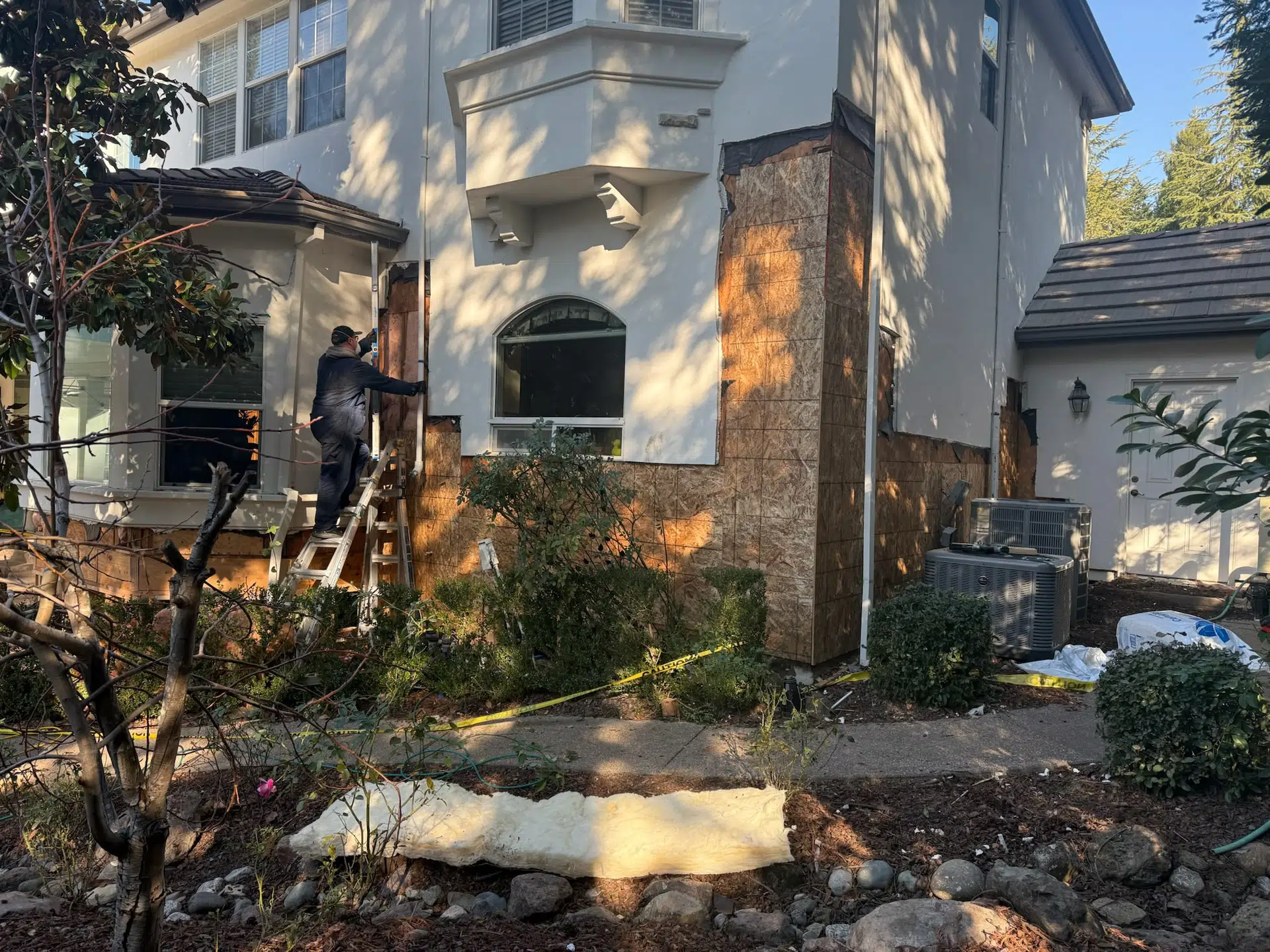
Peak’s public El Dorado Hills dry rot repair project documents opened exterior-wall areas and investigation of concealed deterioration near wall and window transitions. It illustrates an important limit of a photo-based estimate: the exposed area can show only one part of the problem until materials are opened and assessed.
Peak’s own archive also includes images labeled as window trim repair in Roseville. We use these as visual context, not as proof of a particular hidden cause, repair price or outcome beyond what the records confirm.

Trace the water path
How moisture gets behind windows and exterior doors
Failed head flashing
Water running down the wall can enter above a window or door when the upper flashing and wall water barrier are not integrated correctly.
Missing or failed sill pan
Sill-area drainage is intended to direct incidental water outside rather than into the underlying framing or interior floor.
Joints, siding or splashback
Runoff from another wall section, irrigation spray or poorly detailed trim joints can wet an opening repeatedly.
One important caution: do not simply caulk every visible gap. Some windows have designated weep or drainage openings that must remain clear. Sealing them can trap the very water the assembly is designed to release. The DOE guide to finding missing flashing discusses these warning signs.
A stain below a window can also come from condensation, plumbing or another source. The right repair should follow the actual water path, not just the closest damaged board.

Choose the scope
Can you repair the wood without replacing the whole window or door?
Sometimes. If the window or door works properly and deterioration is limited to replaceable exterior trim, a localized repair may solve the damaged-material issue once the moisture source has been corrected. The opening itself still needs an adequate drainage and flashing system.
If the sill, door threshold, supporting frame or wall framing has deteriorated, more extensive work may be needed. A homeowner should not assume that replacing the window fixes damaged framing—or that a cosmetic patch is sufficient for a failed sill.
Different homes also have different materials and opening designs. An accurate proposal should state whether the existing unit remains, what components will be removed and how the repaired opening will be weather protected. Read the DOE window rehabilitation guide for the distinction between a deteriorated sill, casing and decorative trim.
A practical process
Four steps from visible damage to an agreed repair scope
Document
Show the full opening, visible deterioration and recurring moisture symptoms. Describe where and when leaks occur.
Inspect
Review trim, sill, jamb, threshold, nearby siding and water-shedding details for evidence relevant to the scope.
Clarify hidden work
Agree how any necessary selective opening or newly discovered damage will be documented and approved.
Rebuild and protect
Replace compromised material within the agreed scope and restore appropriate flashing, finish and drainage details.
These are homeowner planning steps, not a promise that every job follows an identical sequence. Permits and specialized evaluation may be required depending on actual conditions.
Compare repair proposals
What belongs in a window or door wood-rot estimate?
- Exact opening and the surfaces or framing members included
- Repair versus replacement of trim, sill, jamb, threshold and/or window or door unit
- Access and controlled removal of adjoining cladding, if necessary
- Moisture-source investigation, flashing and drainage work within scope
- Replacement materials, finishes, paint and color-matching expectations
- How concealed deterioration, approvals and change orders are handled
- Permit/inspection responsibility and written warranty terms where applicable
What about cost?
Replacing a short run of decorative trim is a different scope from opening the wall, rebuilding a damaged rough opening and resetting a window. Height, access, materials and hidden deterioration can change the price.
For clearly labeled third-party market guidance on exterior wood decay repairs, see our Dry Rot Repair Cost in Sacramento article. Those ranges are not Peak bids or fixed price promises.
For cases where siding is also damaged, explore Peak’s siding and exterior trim service.
Questions homeowners ask
Window and door wood rot FAQ
How can I tell if a window sill is rotten?
Warning signs can include flaking finishes, soft or crumbling wood, split corners and persistent wetness. They do not prove the extent of decay or whether the underlying framing is affected. Avoid invasive probing or opening finishes without suitable safety precautions.
Can I replace a rotten window trim board without replacing the window?
Possibly, if the window assembly and rough opening remain sound and the moisture problem is corrected. A contractor should confirm whether the sill, flashing or sheathing is also damaged.
Why is the bottom of my exterior door jamb rotting?
Lower jamb ends can be repeatedly exposed to runoff, splashback or moisture at a failing threshold. The source should be identified before replacing or refinishing the affected material.
Will caulk stop water from entering around a window?
Caulk alone is not a substitute for a functioning flashing and drainage system. Do not block a window manufacturer’s drain or weep openings. Poorly placed sealant may trap moisture.
Is wood rot always dry rot?
No. Several types of moisture-related wood decay exist, and staining can also indicate problems unrelated to rot. For the differences among decay, mold and insect damage, see our damage comparison guide.
How do I get a Sacramento-area repair estimate?
Send Peak Construction photos, the ZIP code and a short description using the estimate request form. A property-specific scope depends on what can be safely inspected and what remains concealed.
Continue with verified Peak work
Services, project evidence and repair decisions
Peak Construction · Greater Sacramento
See soft wood or water stains around an opening?
Peak handles exterior wood and dry rot repairs for homeowners in North Highlands and the Sacramento area. Send a few photographs and the location. We can help determine the next appropriate step toward a free estimate without assuming hidden damage from one picture.