Sacramento homeowner guide · Peak Construction
Rotted Fascia & Eaves in Sacramento: Signs, Causes and Repair Options
Peeling paint near a gutter can be a maintenance issue—or a clue that wood behind the roof edge has deteriorated. Learn what the visible signs mean, when a board can be replaced locally, and what should be checked before the repair is scoped.
The short answer
What should you do when a fascia board starts rotting?
Start with the water path, not the paint color. A soft or crumbling fascia board may need replacement, but the assessment should also consider the gutter attachment, adjacent soffit, roof-edge flashing and rafter tails. If the adjoining wood is sound, a localized repair may be practical. If deterioration reaches supporting members, the job can be substantially different.
On Sacramento-area homes, moisture may reach roof-edge wood during seasonal storms, through overflowing gutters, failed joints or other roof-edge details. A stain or peeling paint is not proof of structural damage, but repeated paint failure, sagging gutter fasteners or visibly misshapen wood are reasons to arrange a closer look.
Do not climb onto a roof or lean from a ladder to test questionable wood. From the ground, take wide and close-up photos, note when the staining appears, and keep people clear if material seems loose.
Know the parts
Fascia, soffit and rafter tails are not the same thing
| Component | Where it is | Why it changes the repair |
|---|---|---|
| Fascia board | Typically the vertical finish board along the edge of the roof, often behind a gutter. | May be replaceable in sections if its connections and supporting wood are sound. |
| Soffit / eave underside | The underside of the roof overhang; some assemblies include ventilation. | Damaged soffit can conceal trouble above it and may involve vent or finish restoration. |
| Rafter tail | The projecting end of a roof rafter supporting the eave area. | Rot here involves a structural member and needs an appropriate repair plan. |
| Roof-edge flashing / drip edge | Water-management details near the roofing edge. | Incorrect or failed drainage details can continue wetting newly repaired wood. |
Exact assemblies vary by house. The U.S. Department of Energy’s Building Science Education guidance on drip edge explains why roof-edge detailing matters for moisture management; it is not a substitute for locally applicable plans or code requirements.
Signs to watch for
Six clues the roof-edge wood deserves attention
Paint peels in the same place
Recurring bubbling or flaking may mean water is reaching the wood beneath the coating.
Stains at joints and ends
Discoloration near miter joints, board ends or gutter fasteners deserves investigation, though staining alone does not diagnose rot.
Warping or a sunken board
Noticeable deformation, gaps or crumbling ends suggest the surface may no longer be intact.
Loose or pulling hangers
A sagging gutter may indicate poor attachment, damage to the backing board or a drainage problem.
Open seams or damaged soffit
Gaps and loosened soffit panels can expose adjacent areas to pests or more weathering.
Drips where they should not be
Runoff behind gutters, wet wall streaks or leaks at roof-wall junctions can help locate the moisture pathway.
These are inspection prompts, not a diagnosis from appearance. Water stains, insect damage, fungal decay and weathered paint can look similar.
Peak’s own photo archive
Roof-edge work is more than the board you see
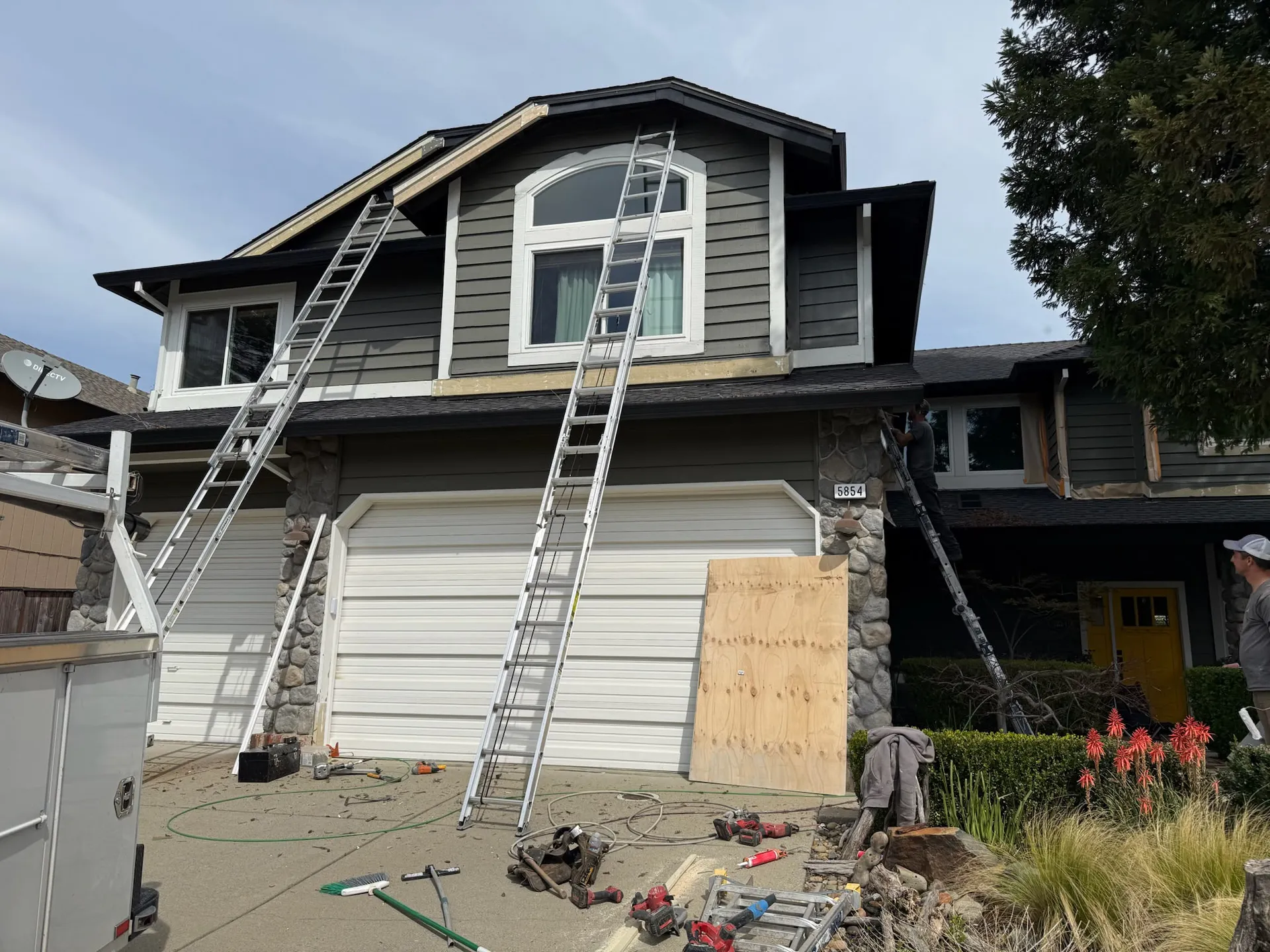
Peak’s project media library includes photographs identified as eaves repair in Granite Bay and fascia work in Rocklin. They offer useful context for the kind of exterior carpentry addressed here, without claiming every pictured area suffered the same cause or repair scope.
During a real estimate, the question is whether the damage ends at the fascia or extends to the gutter attachment, soffit, sheathing, rafter tails or adjacent finish. That distinction determines whether a localized scope makes sense.

Follow the water
Why fascia and eaves can rot again after being painted
Clogged or poorly draining gutters
Overflow can repeatedly wet fascia and fascia-board ends. Check drainage and the connection between gutter, drip edge and board.
Roof-edge or flashing gaps
Water may travel along a joint or behind a finish and become visible away from its entry point.
Exposed end grain or failing joints
Unprotected cuts, open caulk joints or aging coatings can let repeated moisture reach susceptible wood.
Where a roof meets a wall, water diversion can matter as much as the visible trim. The U.S. Department of Energy provides a useful reference for kick-out flashing and roof-wall intersections. Not every home has the same roof detail, and repairing one board will not automatically correct a leak elsewhere.
Repair decisions
Repair, replace a section, or investigate the structure?
Maintenance / refinishing
If the existing wood is sound and the issue is only surface-coating failure, proper preparation, sealing and repainting may be reasonable after the moisture source is addressed.
Scope: sound wood, finish issueLocalized fascia replacement
If decay is limited to an accessible nonstructural board and nearby components remain sound, replacing a section and correctly restoring the roof-edge details may be practical.
Scope: damaged fascia, sound supportExpanded eave repair
If deterioration affects soffit, rafter tails, roof-edge sheathing or connections, the repair may require opening more material and coordinating structural or roofing-related work as appropriate.
Scope: concealed or supporting members
Why access and height matter
Roof-edge repairs often require ladders, scaffolding or other appropriate access equipment. At a second-story eave, safely reaching the work, protecting the surrounding finish and removing or reinstalling gutter sections can affect how the repair is organized.
Never rely on a visual estimate alone to approve structural work. When load-bearing members may be affected, ask how the contractor will verify and document the repair scope. Peak can coordinate applicable permits and inspections where required.
Before choosing a contractor
What should a fascia or eaves repair estimate include?
A reliable estimate should make visible damage and potential concealed damage two separate parts of the conversation.
- The specific roof-edge location, board lengths and affected surfaces
- Access setup and temporary gutter removal/reinstallation, if needed
- The materials to be removed and replaced, including whether supporting members are in scope
- Review of the likely moisture source and any related flashing or drainage work
- Primer, paint, trim transitions and site cleanup included or excluded
- How concealed damage, change orders and additional approvals are handled
- Any permit, inspection and warranty terms relevant to the actual work
What about cost?
A short piece of fascia and a multi-level roof-edge repair cannot sensibly share one advertised price. Access, gutter handling, adjacent decay and finishing all influence a real bid.
For context on how exterior wood-decay estimates are formed—and clearly labeled third-party pricing references—read Peak’s Dry Rot Repair Cost in Sacramento guide.
Common questions
Fascia and eaves repair FAQ
Does peeling fascia paint mean the wood is rotten?
No. Paint failure can have multiple causes. Repeated moisture exposure, soft or crumbly wood, warping or compromised connections are stronger reasons to request an inspection. Appearance alone does not establish the repair scope.
Can you replace fascia without replacing the roof?
Sometimes. If the surrounding roof-edge assembly and support members are sound, a board can be replaced locally. A leaking roof edge, damaged decking or rafter tail may require a wider repair plan.
Do gutters have to be removed for fascia replacement?
Where a gutter is mounted to the affected board, a section may need temporary removal or support. The contractor should explain the access and reinstallation plan in the estimate.
Is a rotted rafter tail the same as a rotted fascia board?
No. A fascia board is commonly an exterior finish/attachment member; a rafter tail is part of a structural roof framing member. Structural repairs need a scope appropriate to the specific condition.
Can rot return after the wood is replaced?
Yes, if the moisture pathway remains. Repainting or replacing a board does not resolve overflowing gutters, failed flashing or an ongoing roof leak by itself.
Does Peak handle fascia and eaves repair in the Sacramento area?
Yes. Fascia and eaves are within Peak’s exterior repair scope, serving North Highlands and Greater Sacramento. For address-specific availability, submit your ZIP code and photos through the estimate form.
Related service and homeowner guides
Keep the repair connected to the whole exterior
Peak Construction · Greater Sacramento
Not sure how far the roof-edge damage goes?
Send photos of the fascia, eaves and nearby gutters. Peak can review your request and explain the next step toward a free estimate, without pretending that a picture reveals every hidden condition.
Photo and editorial note: the Rocklin fascia and Granite Bay eaves images come from Peak Construction’s existing labeled project-media library; no invented invoice totals, customer testimonials or structural diagnosis have been added. This article is general homeowner information, not an inspection. Return to the Peak Construction homepage or contact Peak for a property-specific review.